About Native Plant Master
Native Plant Master logo

The Native Plant Master (NPM) Program is an award-winning, non-credit, educational program offered through CSU Extension to educate the public about native plants in order to foster stewardship, sustainable landscaping, and management of weeds that threaten native ecosystems.

Native Plant Master courses offer students the chance to grow their botanical knowledge, with the option to pursue certification as a Native Plant Master.

Prerequisites to Native Plant Master Courses

All Native Plant Master participants must meet the botany prerequisite to enroll in Native Plant Master courses. For those who have a minimal background in botany and using a dichotomous key, there are two options to fulfill the requirement:

  • Option 1: Native Plant Identification & Keying Online Class (Free)
     This online class outlines key characteristics of plant families and uses an interactive dichotomous key to distinguish genera and species. This is vital knowledge to be successful in NPM courses and is required for participants with minimal or no background in botany. This class is open to all participants who would like to refresh their botanical knowledge. A second optional class, Field Botany & Native Plants, is included in this bundle offered for free with the registration in an NPM 3-day course. Links to these classes will be sent after registration.
     
  • Option 2: In-Person Botany Primer for Colorado’s Plant Families ($50)
    Participants may instead choose to meet the prerequisite by attending an in-person Botany Primer class. Details for this class are included below in Class Descriptions.

Native Plant Master Field Courses:

Each Native Plant Master course is made up of three sessions in a single location, held three successive weeks with an exam given at the last session. 

You will learn common and scientific names, ecological relationships and human uses of 40-50 plants. You will also develop skills in using family features and a botanical key to identify plants. Course includes special emphasis on native plants useful for landscaping and covers invasive plants that threaten native ecosystems.

Each Field Course session will focus on an educational native plant and ecological topic:

  • Session 1: Botanical characteristics of plant families and species, identification using a botanical key, scientific names, and stewardship of native plants.  
  • Session 2: Ecological relationships including non-native species, noxious weeds, and relationships with wildlife, pollinators, and other plants.
  • Session 3: Written field exam on material from first and second sessions. Human uses, including use of natives for sustainable landscaping, ethnobotanical, and other uses.

All NPM courses are held in the field and may require strenuous walking for extended periods on steep inclines for two or more miles on wet, rough, and/or slippery footing during windy, cold, hot, rainy, or snowy days. Courses include risks, hazards and dangers that are integral to natural areas.  
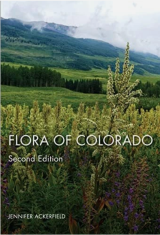
cover of Flora of Colorado book


Required Text:

All participants must bring Flora of Colorado, 2nd Edition by Jennifer Ackerfield to each session. It's important to obtain the 2nd edition of this book for the NPM Course. If you don’t currently have the correct edition, please plan to obtain it before your next session. 

If obtaining the book is a challenge, you can rent from the Larimer Extension office with a refundable $50 deposit, or purchase at cost of $75. There are 3 copies of each available.


Required Materials:

  • NPM manual (you will receive at your first class)
  • 10X-magnification hand lens
  • Measuring device that shows decimeter measurements
  • Pencil

Additional Recommended Materials: 

  • Water and snacks
  • Weather-appropriate clothing, footwear
  • Equipment like sunscreen, rain gear, hat, and sunglasses  

Native Plant Master Certification

To become a certified Native Plant Master, participants must take three different courses, ideally held in three different life zones (i.e., foothills, plains, or montane) or held at different times of the year to minimize overlap of plants covered. The three courses do not need to be completed in one year. Participants must pass each of the three exams with a grade of “C” or higher.  Certification is awarded in December. 


For more information about the Native Plant Master Program, please contact Jenna Brager at bragerje@co.larimer.co.us or call (970) 498-6026. 
Prerequisites

Native Plant Identification & Keying Online Class

This online class outlines key characteristics of plant families and uses an interactive dichotomous key to distinguish genera and species. This is vital knowledge to be successful in NPM courses and is required for participants with minimal or no background in botany. This class is open to all participants who would like to refresh their botanical knowledge. A second optional class, Field Botany & Native Plants, is included in this bundle offered for free with the registration in an NPM 3-day course. Links to these classes will be sent after registration.

-OR-

In-Person Botany Primer for Colorado’s Plant Families Class

Date: May 9, 2026 | 9am–3pm
Time: High Plains Environmental Center

Cost: $50
Instructor: Denise Culver

Description: This prerequisite class is available to all Native Plant Master Participants. It is REQUIRED for those who have minimal or no background in botany. However, all participants are welcome to enroll, including those who would like to refresh their botanical knowledge.

Learn key characteristics of the main plant families in Colorado. The class will review basic terminology and vegetative morphology. Classroom in morning and then test your new skills wandering about HPEC. Bring snacks, lunch, notebook, Flora of Colorado, pencil, and hand lens.


Native Plant Master Courses

Eagle's Nest Open Space 

Dates: May 13, May 20, and May 27
Time:  9am–1pm
Cost: $150

Life Zone: Montane
Instructor: Denise Culver

Description: Class will explore and learn about plants within the Laramie Foothills ecosystem at the base of prominent rock outcrop and the riparian area along the north Fork of the Poudre River.


Lory State Park 1

Dates: May 19, May 26, and June 2
Time:  8:00am–12:00pm
Cost: $150

Life Zone: Foothills
Instructors: Alexis Emslie, Jack Van Vleet

Description: This class will provide insight into the plant communities of the transition zones of foothills to the low montane and best management practices to steward these communities. Participants will learn to use the Ackerfield key to recognize common plant family characteristics and to key out a variety of forbs, shrubs, and trees.


Lory State Park 2

Dates: May 22, May 29, and June 5
Time:  8:30am–12:30pm
Cost: $150

Life Zone: Foothills
Instructors: Marcee Camenson, Barb Patterson

Description: This class for beginners emphasizes plant identification in a lively, supportive learning environment. Barb and Marcee teach together to give you double the fun and individual attention. They teach the basics to prepare you for the rewarding journey of learning more about native plants and their role in our local ecosystem.


Rocky Mountain National Park

Dates: June 16, June 23, and June 30
Time:  8:00am–12:30pm
Cost: $150

Life Zone: Alpine
Instructor: Marlene Borneman

Description: Learn alpine tundra plant communities and what plants grow in these communities. How do alpine plants survive & thrive above 11,500 feet? What are the common plant family characteristics that grow in the alpine life zone? Sign up for this class to find these answers and more about the alpine life zone.


High Plains Environmental Center

Dates: July 13, July 20, and July 27
Time:  8:00am–12:00pm
Cost: $150

Life Zone: Plains
Instructors: Ann Grant, Anita Rae

Description: Students will learn to confidently key common Front Range plants as well as resources available to advance their own self study of native plants, officially designated weeds, and gardening with native plants to save water and create ecosystems for pollinators, other beneficial insects, and small mammals. Plant families will be emphasized. This site is generally flat with a good variety of shrubs, forbs and grasses, and a few wetland species, in a naturalistic garden setting. Nature willing, a rare plant may be seen during the last class.

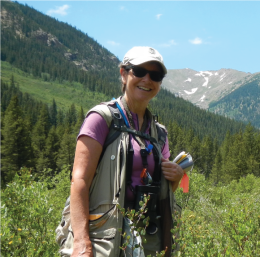
Photo of Marlene


Marlene Borneman
A certified Native Plant Master and author of several CMC Press field guides, Marlene has been documenting Colorado’s flora since 1974. She combines decades of formal botany study with extensive fieldwork, including her award-winning research with Rocky Mountain National Park’s Alpine Bloom Crew. As an experienced guide who has summited all of Colorado’s 14ers, she brings a unique, "boots-on-the-ground" perspective to her instruction for the Rocky Mountain Conservancy and the Native Plant Master program. Marlene is dedicated to fostering stewardship and sharing the secrets of alpine habitats with students of all levels.


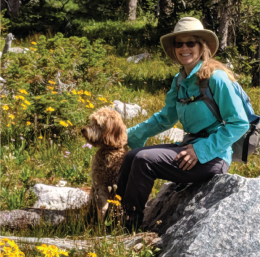
Photo of Marcee among native plants


Marcee Camenson
Plants are Marcee's bliss. She is currently an instructor at Front Range Community College and holds a Master’s degree in Botany with a focus on plant physiology and ecology. For the past twelve years, Marcee has had the pleasure of teaching native plant ecology and identification at Lory State Park.  She looks forward to the opportunity to share her knowledge and enthusiasm with you.


Photo of Denise


Denise Culver
Denise is a retired botanist with over 35 years experience in Colorado, Wyoming and Montana. Denise worked for the Natural Heritage Programs in Colorado, Montana and Wyoming. She loves to share her passion for all things with chlorophyll!


Photo of Alexis


Alexis Emslie
This is Alexis Emslie's second year co-teaching a Native Plant Master Class. Alexis enjoys teaching plant ecology, giving extra attention to soil, and learned under Jennifer Ackerfield at CSU. She has a background in rangeland ecology and has been with USDA Natural Resources Conservation Service for six years as a Soil Conservationist. She conducts the National Rangeland Inventory in northwest Colorado, a rigorous monitoring protocol that inventories plants species and land use over time. In her free time, she propagates native plants from seed and creates herbarium specimens.


Ann Grant
Ann has been a Native Plant Master Instructor since 2018, teaching classes at Bobcat Ridge and Pine Ridge Natural Areas, and for the past few years at HPEC. Ann is a member of the Colorado Native Plant Society, past Northern Chapter President and Board Director, and currently Board President. For many years she propagated native and other horticultural plants. Ann is a self-taught botanist and plant propagator with a formal education in chemistry and a career in the food and pharmaceutical industries, retired. She was born and educated in New Jersey and loved wandering the parks and forests learning the mid-Atlantic wildflowers, ocean swimming on the Jersey shore, sailing and sailboat racing on the Hudson River, trips to NYC to attend concerts, plays, ballet, museums, hiking and skiing in the Appalachians and Adirondacks, but now calls Colorado home.


Photo of Barb among native plants


Barb Patterson
Barb has been teaching a wide variety of natural resource subjects for many years. She loves teaching in the field—whether focusing on plants, animals, or especially birds—and she works hard to actively engage students in their learning. Teaching about native plants is something she believes in, and she thoroughly enjoys teaching at Lory State Park, one of her favorite natural areas. Barb's hope is that even if you don’t learn the name of every plant in the book (yes, it is a big book!), you’ll leave curious, confident, and knowing how to continue learning on your own.


Photo of Anita


Anita Rae
Anita completed the northern Colorado NPM courses last year and in 2006 in central Colorado. She is a volunteer naturalist for Larimer County with special interest in plant/pollinator relationships.


Photo of Anita


Jack Van Vleet
Jack  studied Rangeland Ecology at CSU. He started botany work with understory monitoring and inventory with Colorado Forest Restoration Institute, and has been the lead Restoration Ecologist at High Plains Environmental Center in Loveland since 2018. HPEC stewards a 76 acre open space to promote native plant communities and sells 200 species of native forbs, shrubs and grasses available to the public in their native plant nursery.


Larimer County CSU Extension

CONTACT US
Email:extnsn01@larimer.org
Phone: (970) 498-6000

ADDRESS     
1525 Blue Spruce Dr.     
Fort Collins, CO 80524-2004

  Sign up for our e-newsletter