How Partners, a Larimer County mentoring program, changed one woman’s life
Investment of behavioral health tax dollars in Partners leads to positive outcomes for youth
When you see the behavioral health sales tax on your Larimer County receipts, think of Kat and Shauna.
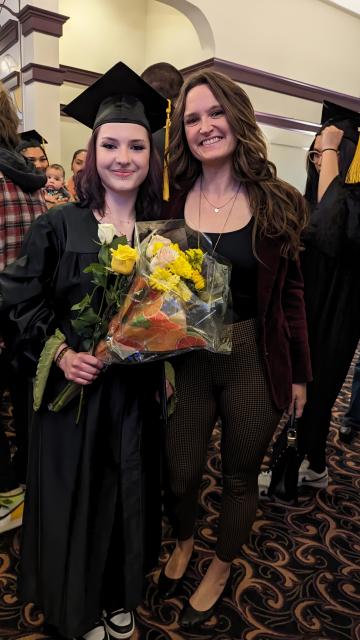
Twenty-year-old Kat started with Partners as a skeptical middle schooler. She didn’t expect to find a lifelong friend in her mentor, Shauna Gray, 45.
Their bond became an immovable bedrock, where Shauna’s steady presence gave Kat the solid ground to build her own independence. Through the years, their connection – matched perfectly through the program's intentional interviews – became a masterclass in resilience.
“They did an awesome job pairing us. It’s impressive, really,” said Gray, during a virtual interview. She playfully flipped her hair as evidence of the sassiness Kat was looking for in a mentor.
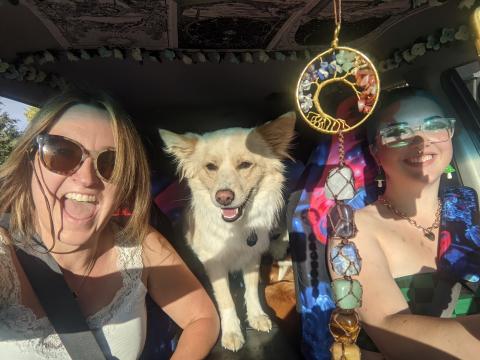
Together, they’ve tackled the big milestones and the heavy hurdles: Navigating grief and loss. Dropping out of school and later earning a GED. Securing housing. Planning for financial stability, from filing taxes to discussing household budgets. And reviewing and discussing local and federal issues, as Kat prepared to vote for the first time.
This is what community investment looks like in action.
By utilizing behavioral health sales-use tax dollars to support local pillars like Partners (serving Northern Colorado since 1978), we aren't just funding a program. We’re funding the preventative power of human connection. Kat and Shauna prove that when we invest in mentorship, we can change the trajectory of a life.
Larimer County’s investment in the next generation
As part of Larimer County Behavioral Health Services’ (BHS) competitive, annual Impact Fund Grant Program, Partners has received six grants since 2020 totaling $519,193.
Coming out of the COVID pandemic, the Partners' team was seeing the same thing as others in our community: Youth were struggling.
They knew mentoring was an evidence-based way to support Larimer County youth facing significant mental health and substance use and abuse challenges, as well as academic issues. But the organization didn’t have the capacity to respond; that is, until the taxpayer support invested through BHS.
There is “no exact roadmap, because every kid is different. It’s about a shared experience and opening the window to show kids what’s possible,” said Heather Vesgaard, executive director of Partners.
Through social-emotional training and prevention education, as well as mentoring, Partners can potentially “show up for kids before they’re exposed to different things,” added Shayna Kefalas, program director. “It’s been pretty amazing,” she said, to see the impact of the organization’s early prevention efforts coupled with its intervention work.
Kat described her life as always being “quite chaotic, sometimes from my own doing.” She ran away for a while around the age of 14. When school shifted from in-person to virtual in 2020 due to the pandemic, Kat struggled a lot. She fell behind in credits, dropped out of high school, and moved out of her mother’s house at 17.
After working full-time for a while, she did what she never thought she’d do: earned her GED in 2024 in only about three to four months. She got her first apartment in April 2025, kept working at a cleaning company and, in spring of 2026, completed her certification through Front Range Community College’s phlebotomy program.
Simply put, she loves to learn and grow.
“Kat’s a badass,” said Gray. “She doesn’t have the same privileges that others in the community have. She didn’t have the same parental financial assistance with school or housing that I had growing up. That’s just amazing. Without all of that privilege, you’re creating this life for yourself,” she told Kat, who was visibly proud.
The ROI of Connection: By the Numbers
Kat and Shauna’s story isn't an outlier; it’s the standard. After just one year, 334 youth (ages 7-17) in both community-based and school-based mentoring programs showed measurable growth in the areas that define a healthy adulthood, according to the final report for Partners’ 2024 Impact Fund grant:
- Worth and confidence: Up to 78% of youth maintained or increased their sense of self-worth, with nearly 60% reporting higher self-esteem.
- Internal strength: 68% of community-mentored youth developed a stronger "locus of control" – the belief that they have the power to shape their own futures.
- Healthy choices: Over 70% of youth increased their awareness of the risks associated with alcohol, tobacco, and drugs, while 66% strengthened their resolve to avoid them.
- Academic stay-power: Nearly 60% showed a deeper commitment and bonding to their school environment.
- Decision-making: Up to 64% improved their goal-setting and intentional planning skills – the same "adulting" tools Shauna empowered Kat to build.
- Social intelligence: 70% saw a boost in their interpersonal skills and their ability to form healthy bonds with adults outside their immediate family.
BrainWise, the prevention curriculum Partners staff use in schools and community training, is designed to “keep pace” with community and school district needs. It addresses the increases in substance use and abuse, as well as mental health issues that youth are navigating.
The focus is on equipping young people with the clarity to make life-altering choices. Data from the 2024 final grant report show:
- The power of "no": 86% of youth reinforced or grew their personal commitment to staying clear of drugs and alcohol. They aren't just following rules; they are building their own conviction.
- Understanding the stakes: 65% of participants gained a sharper, more realistic understanding of the risks involved with substance use.
This isn't just drug and alcohol education. It’s about replacing uncertainty with the confidence to protect their own futures. When we invest our tax dollars here, we are helping nearly 9 out of 10 kids build a personal "inner compass" that points toward health and safety.
“The prevention thing is huge,” said Gray. “Looking back, Kat's life could have taken a very different path. When our community invests in young people before challenges escalate, we all benefit – not just by helping the individual thrive, but also by reducing the need for more intensive interventions that drain local resources later on."
Kat had advice for adolescents and teens who might be unsure of the mentoring program: “Honestly, it doesn’t hurt to try it. At a minimum, you get to hang out with someone and do experiences you might not get to do otherwise,” Kat said. “If you hate it, you hate it. But you never know until you try it.”
If you don’t, she added, you might be “passing up an opportunity that could change your life in so many ways.”
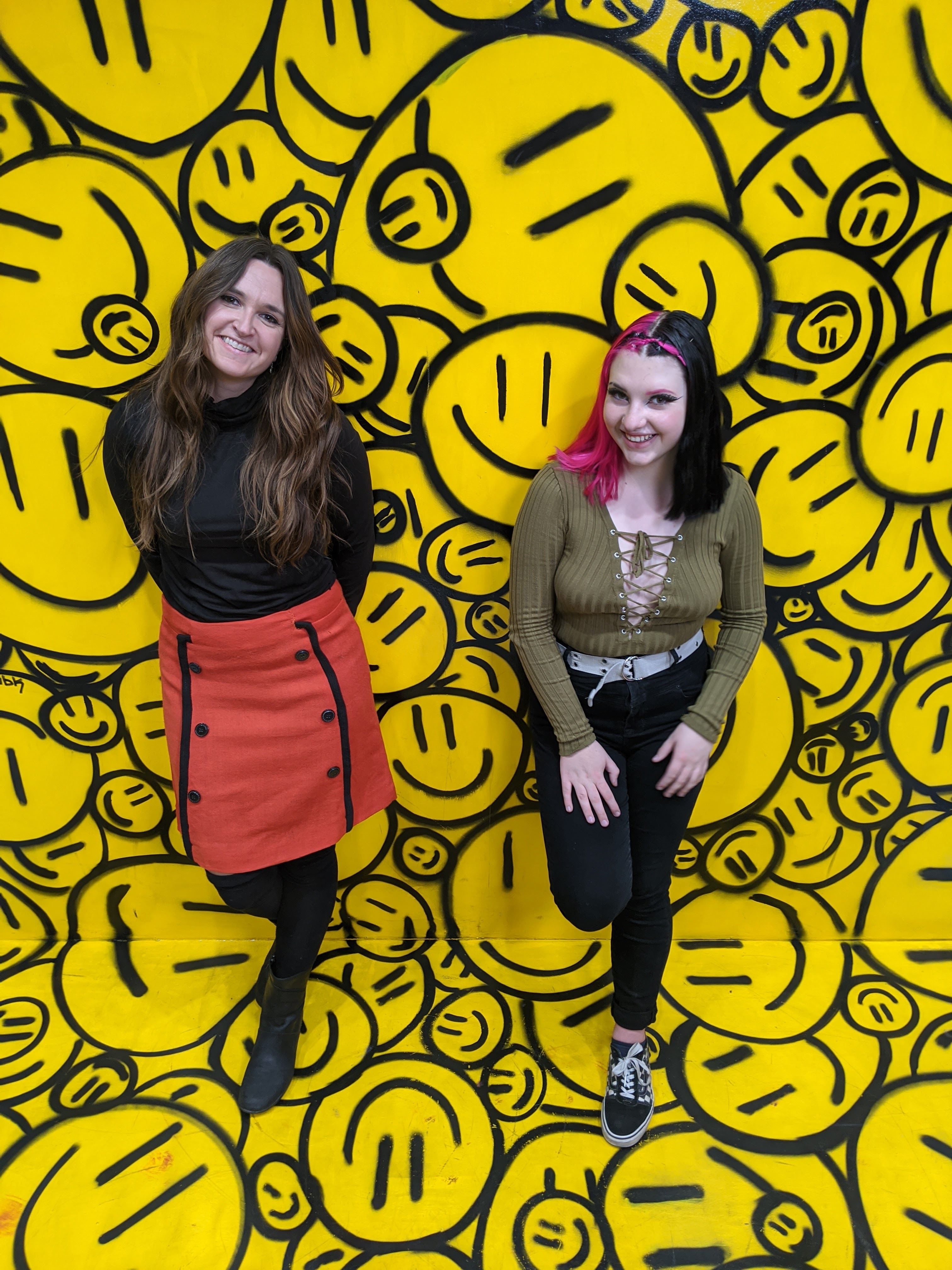
Partners - Serve your community
- The organization has served Northern Colorado youth and families since 1978.
- Finding adults willing to serve as mentors isn’t always easy.
- If this interests you, learn more here.
- Shauna Gray, a former mentor and now Partners board member, said this is what she tells people when she talks about the experience: “Being a mentor is easier than you think. It isn't about being a perfect adult. Kids relate more to people when they show up as themselves and can share their real, lived experiences. It's just two humans connecting with each other, and everyone has something to offer."
Madeline Novey
Communication Coordinator
Behavioral Health Services
970-619-4255
noveyme@co.larimer.co.us

