All Larimer County Administrative Offices, District Attorney, Courts, and Ranch offices will be closed to celebrate the Juneteenth National Independence Day holiday on Friday, June 19, 2026. The Larimer County Landfill will be open.
Critical county services are not disrupted by closures.
Don't let your leaves and branches go down the drain
Fall Friendly Reminder: Please recycle, mulch or bag those leaves and branches and don't let them make their way to the storm drain.
Clogged storm drains cause flooding and when leaves make their way to our streams and lakes, they contribute nutrients that cause algae blooms.
Please keep our streets and waterways clean!
Did you know that you can prevent water pollution?
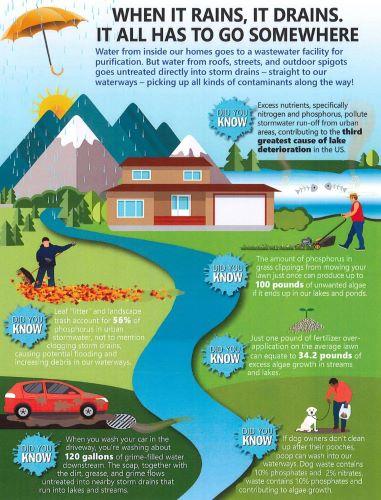
Did you know that stormwater pollution starts at home? Pollution comes from the pet waste left behind when you don’t pick up after your dog or when you apply too much fertilizer on your lawn. It happens when you wash your car and the soapy, dirty water flows onto the street, and eventually into the storm drain.
Stormwater that does not infiltrate into the ground instead runs off your property and ends up in our lakes, streams and rivers. By taking some simple steps, you can reduce your stormwater runoff and keep it clean. You can help to keep our waterways clean for your friends, family, and those who live downstream from you.
In a natural ecosystem, rain soaks into the ground, and trees, shrubs, and vegetated areas slow down flowing water. Our urban landscapes have replaced these permeable surfaces with impermeable streets, sidewalks, driveways, and rooftops that cannot absorb water. This leads to stormwater runoff, with water rapidly running down paved surfaces and into storm drains, which lead directly to local waterways.
If you own your home or have permission from a landlord or Homeowners Association (HOA) to make adjustments, consider finding ways to slow the flow of rainwater from your home and property.
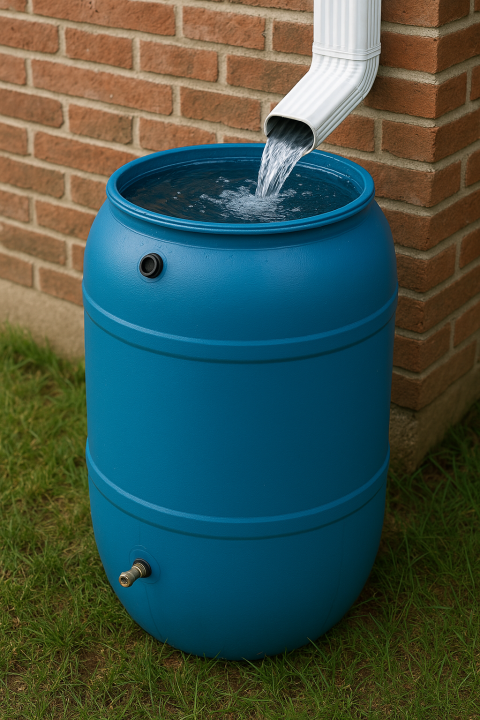
Install a rain barrel (2 barrels per household)
Use permeable surfaces for foot paths and driveways
Divert water to gardens but always consider your neighbors to make sure you are not diverting water to their properties.
Did you know melting snow and ice, along with deicing agents, make their way to our rivers & streams? See below to learn how you can reduce the impact of deicer pollution in waterways.
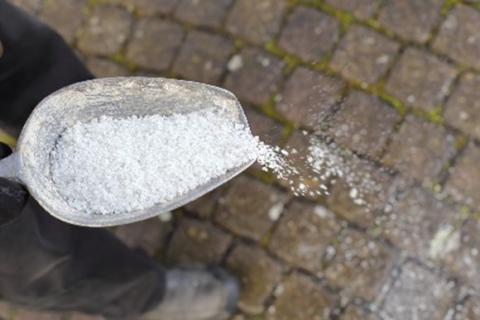
Spread deicer before snow and ice accumulates
Use only what you need - just a handful per sq yard.
Sweep-up sidewalks and driveways of residual deicer one those areas are dry.
Remember to keep leaves and debris out of the streets, gutters and storm drains. Leaf piles on the road can become potential blockages in the public storm drains and can lead to many issues, including flooding.
Mulching or recycling your leaves is the best option to keep that material out of the landfill.
Compost leaves at home or through local composing businesses
Use leaves to cover your garden beds which insulate your plants and soils over the winter
Connect with neighbors who need leaves through online social networks such as Nextdoor, Facebook and others.
Sign-up for curbside pick-up of leaves and yard trimmings
DO NOT blow your leaves into the street. Stormwater carries that material to the storm drain, which can get clogged and cause flooding.
When it rains, fertilizer runs off your lawn into storm drains and streams.
Don't overwater your lawn!Water that does not infiltrate just runs off into the street along with your $$$.
For your flowers and shrubs, consider using a soaker hose or drip irrigation instead of asprinkler.
Use pesticides and fertilizerssparingly.
Consider using natural fertilizers such ascompost and look for phosphorous free fertilizers.
Select pest-resistant plants or try companion planting to reduce the need for gardenchemicals.
Bag your grass clippings, or better yet, put them in your green waste can. Don’t blow them into the street or dump them into an irrigation ditch where they become a water pollution problem.
Dirt from landscaping projects can cause sediment and debris to be carried into storm drains.
Sweep up litter and dirt from sidewalks and driveways.
Prevent dirt from leaving your project site. Do not store materials or soil stockpiles in the street. Stormwater can carry these materials into the stormdrains.
Seed and mulch or establish lawns in bare areas as soon as possible.
Painting, cleaning and other projects can produce household hazardous waste products. Dispose of paint and cleaning materials properly. Call the Hazardous Waste Disposal Hotline at (970) 498-5771
Permanent water quality structures are designed to improve and maintain water quality in stormwater runoff, often by capturing and treating runoff. Some common types of control measures in Larimer County include:
Extended Detention Basins (EDBs): these basins temporarily store stormwater runoff for a longer period, allowing pollutants to settle out before the water is released. They are designed to drain within 48-72 hours.
Vegetated Swales and buffers: These are broad, shallow channels lined with vegetation that slow down and filter stormwater runoff.
Bioretension: A stormwater management practice that uses vegetated areas, often called rain gardens, to filter and treat runoff, reducing pollution and runoff volume through natural processes like filtration, infiltration, and evapotranspiration.
Constructed Wetland Ponds: These are engineered wetlands designed to treat stormwater runoff by using natural processes.
Regardless of what kind of permanent water quality structure you have in your neighborhood, at your business or on your property, they all require maintenance to function properly. You can learn more about how to maintain your water quality control measure by visiting our videos pages. You can find contractors to perform maintenance on our helpful links page. Visit our Stormwater Standards page to learn about design requirements.
Washing your car and degreasing auto parts at home can send detergents and other contaminants through the storm sewer system.
Use a commercial car wash that treats or recycles its wastewater.
Or wash your car on the lawn where the soapy water can infiltrate instead of running off into the street.
Pour dirty soapy water down the sink, not on the street.
Use phosphate-free and biodegradable cleaners.
If motor oil or parts cleaner spill occurs, use cat litter or sawdust to soak up fluid. Then dispose of used absorbent in the trash.
Recycle vehicle maintenance products. Call Larimer County's Hazardous Waste Disposal line at (970) 498-5771 for information on the materials they accept, or visit their webpage
Leaking or poorly maintained septic systems release effluent filled with nutrients and pathogens that can be picked up by stormwater and discharged into nearby bodies of water.This is a health-safety problem and endangers people and the environment.
Don'tdisposeofhouseholdhazardouswasteinsinksortoilets.CalltheHouseholdHazardousWaste Hotline at (970)498-5771.
State and county laws require that all septic systems be permitted by the Larimer County Department of Health and Environment prior to constructing or making repairs to a septic system. Questions? Call OWTS at (970) 498-6775
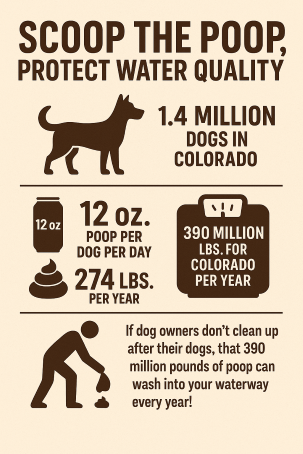
Did you know that dog waste is the THIRD largest contributor of bacterial pollution in our waterways? When you and your neighbors pick up after your pets, it helps reduce pollution in our rivers and streams.
When walking your pet, remember to pick up and bag their waste and dispose of it in the trash. Don’t leave the bags behind – there is no poop fairy!You can purchase “Pack it Out Bags” to hold your collected waste bag until you get to a trash can.No one likes carrying a stinky bag in their pack!
Please visit our videos page to learn more about why it’s important to pick up after your pet.You can also find helpful tips, including those “Pack it Out Bags” by visiting our links page and look for “Pet Waste”.
Did you know Colorado has a nasty poop problem? Coloradans love to recreate in the outdoors, and there are so many wonderful places to hike, bike, float, hunt and fish. But when nature calls #2, and you “have to go”, it’s important to know how to do it in a way that is least impactful to the environment and to everyone else recreating in that area.
Luckily, it’s easy to do your business responsibly. Build a poop kit! Having a poop kit in your backpack or vehicle will ensure you are set up for any situation. A poop kit should include:
hand sanitizer
toilet paper
a bag to pack out that toilet paper
a WAG bag to collect that poop and pack it out. This is now the best practice.
a small dry bag to pack your WAG bag back out. This gives you some added security and you can lash it to your backpack
a trowel for when catholes are necessary.
This practice is no longer advisable because there are just too many people digging catholes.
And contrary to what you might think, after years of being buried, the feces just do not decompose - Yuk!
What about #1?
The Leave No Trace principles:
Toilet paper must be disposed of properly! The best practice is to pack it out in a plastic bag.
Some gals like using a pee cloth that you can wash with water and dry.
Urine has little direct effect on vegetation or soil. In some instances, urine may draw wildlife attracted to the salts.
Wildlife can defoliate plants when they lick the foliage and dig up soil. So, urinating on rocks, pine needles, and gravel is less likely to attract wildlife.
Diluting urine with water from a water bottle helps minimize negative impacts.
If you are on the water – as the saying goes “the solution to pee pollution is dilution”, so go ahead and pee in the water. That’s easy!
If wildlife go in the woods, why can’t I?
Human feces harbor viruses and bacteria that are harmful to pets, wildlife and other people! Stormwater carries those pathogens into the soil and into the water ways. And no one likes to see what you left behind! The number of people recreating outdoors has exploded and unfortunately so has the impact. Please visit our videos page to learn more about why it’s important and how to “Poop in the Woods”.You can also learn more by visiting our links page
Stormwater runoff — rain or snowmelt that flows over streets, parking lots, and lawns — picks up litter, plastics, cigarette butts, food wrappers, yard waste, and other debris. Unlike water that goes down the sink or toilet, stormwater is not treated before it flows into rivers, lakes, and streams.
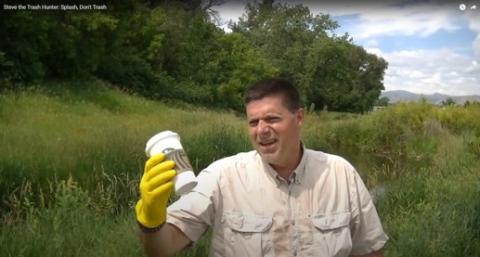
Check out Stormwater Stan's "Steve the Trash Hunter" message on our Videos page
Trash and debris in waterways:
Harm wildlife: Animals can ingest or become entangled in litter.
Degrade water quality: Debris can release toxins and nutrients that fuel harmful algae blooms.
Create safety hazards: Submerged branches, glass, and trash can injure swimmers, boaters, and pets.
Diminish enjoyment: No one wants to fish, swim, or paddle in polluted water.
Keeping Waterways Safe and Enjoyable
You can help protect water quality and keep our waterways safe for recreation by following these simple steps:
Dispose of trash properly. Always use trash and recycling bins — even small items like bottle caps and cigarette butts make a big impact.
Secure your loads. If you haul trash, yard waste, or construction debris, cover and secure your load to prevent it from blowing out.
Pick up after your pet. Pet waste left on the ground can wash into streams, bringing harmful bacteria with it.
Join a cleanup. Many local organizations host stream or lake cleanups — it’s a great way to give back to your community and enjoy the outdoors.
Be a responsible paddler or boater. Bring a bag to collect your own trash and any you find along the way.
Discharges of water from pools, fountains and similar types of facilities, fed by potable water, do not need to be permitted so long as the activity follows the criteria and provisions outlined in the Colorado Department of Health and Environment (CDPHE) Low-Risk Discharge Guidance.
Refer to our Links Page for more information and to get the guidance document.
Americans With Disabilities Act (ADA) Per the Americans with Disabilities Act (ADA), Larimer County will provide a reasonable accommodation to qualified individuals with a disability who need assistance. Services can be arranged with at least seven business days' notice. Please email us at [email protected] or by calling (970) 498-5700 or Relay Colorado 711. "Walk-in" requests for auxiliary aids and services will be honored to the extent possible but may be unavailable if advance notice is not provided.