Need urgent care and looking for help?

Life's challenges can sometimes be difficult. If you or someone you know is in need of urgent mental health or substance-use help, call SummitStone Health Partners at 970-494-4200 for 24/7 care. If you are looking for other community mental health and/or substance use counseling and support, call Connections at 970-221-5551. Call 988 to reach Colorado's Suicide and Crisis Lifeline. 

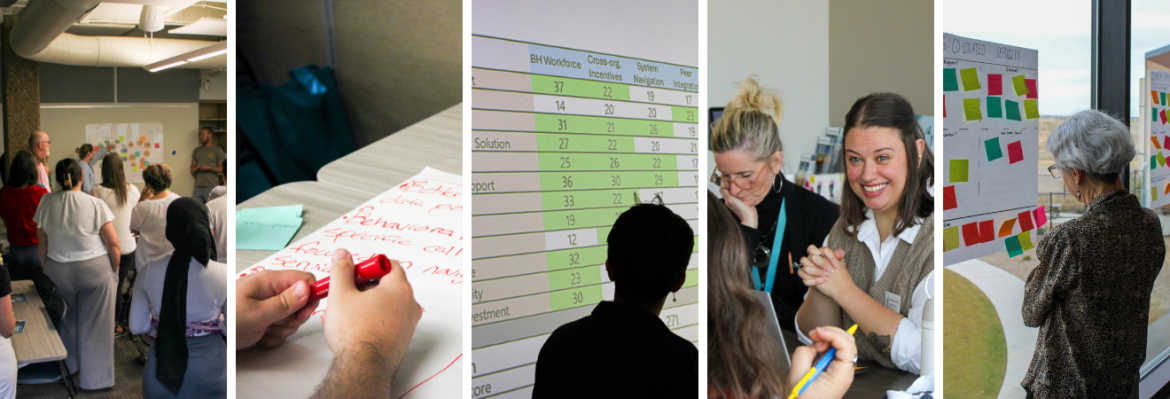
Five vertical photos show stages of Behavioral Health Services' multi-year funding framework development process


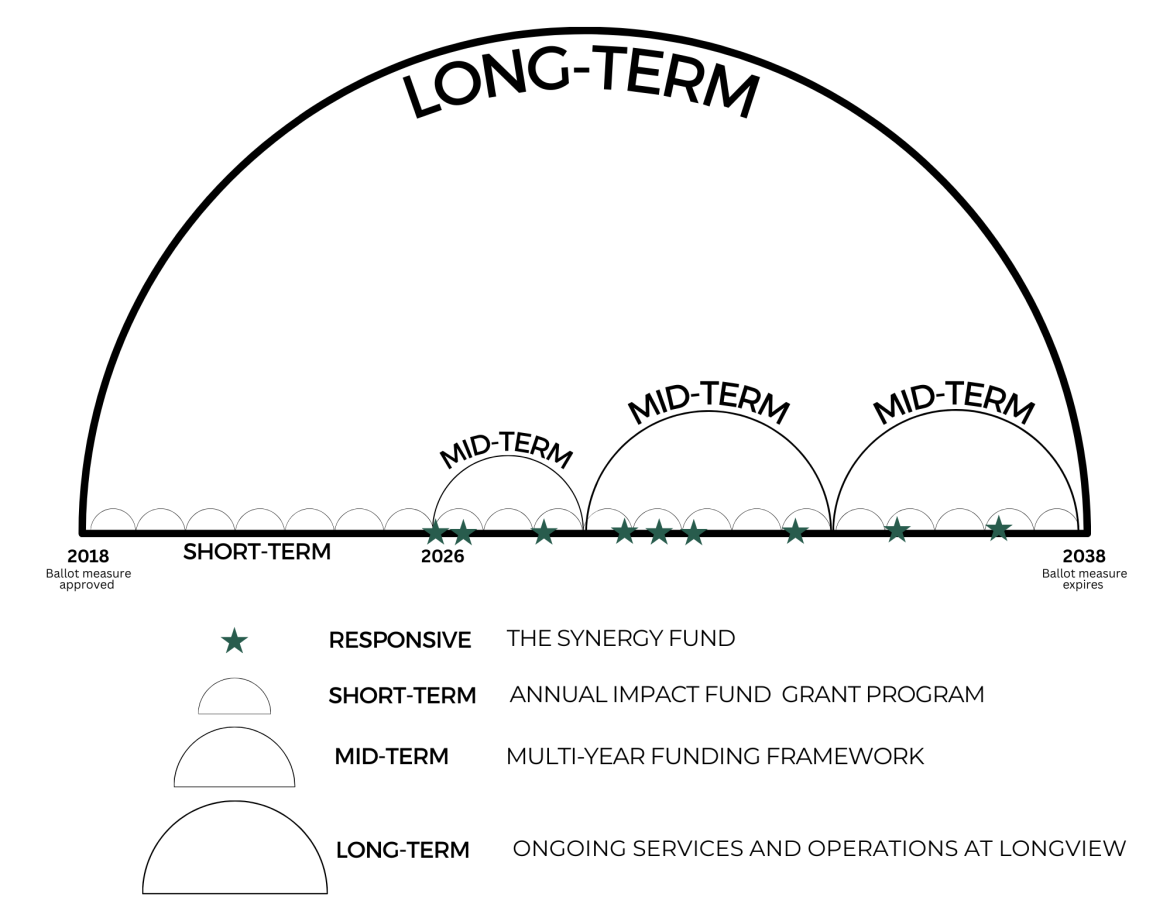
At the direction of the Board of County Commissioners, Larimer County Behavioral Health Services are moving forward with a key strategic goal: to strengthen our community investments by allocating a portion of behavioral health sales-use tax dollars to support multi-year, cross-organizational system improvement projects. This is in addition to other successful investments, including the Acute Care facility at Longview Campus and annual Impact Fund Grant Program.

Following a robust engagement process, BHS is investing in two of the top-three areas of priority identified by behavioral health stakeholders: the behavioral health workforce and a consumer access portal, to increase community access to mental health and substance-use treatment options. Learn more below.
  • Starting in 2026, BHS will begin investing in transformative system-level changes that strengthen care, connection, and compassion for each person in our community.
  • Funded projects will bring organizations together to solve community challenges.
  • Because of the long-term nature of this work, it may take some time before we see outcomes from funded projects.
  • Multi-year funding is not a replacement for the annual Impact Fund Grant Program or a way for single organizations to get multiple years of funding for what they’re already doing.

Graphic showing BHS' four different investment strategies for behavioral health sales-use tax dollars

  • Behavioral Health Services believes in community-driven, community-informed work and bringing people and organizations together to solve our community's complex behavioral health challenges.
  • The department is working with Corona Insights to facilitate community engagement, synthesize input, and collaborate with stakeholders on implementation and evaluation plans. Members of the behavioral health care community -- think private providers, hospital system representatives, municipal leaders, nonprofit staff, and more -- have been sharing their ideas and will continue to be part of this work.
  • In summer and fall 2025, more than 100 behavioral health stakeholders shared ideas, experiences, and hopes for our multi-year funding initiative through six in-person and virtual engagement sessions and two online questionnaires.
  • Stakeholders guided us toward three areas of focus: behavioral health workforce development; co-located services and incentives for organizations to work together; and system navigation tools that help people access the services they need when and where they need them.
  • Over 120 ideas from stakeholders were also narrowed down to three multi-year investments, presented Dec. 17, 2025, to the Board of County Commissioners.
  • Read Corona's summary of stakeholder engagement, including ideas and feedback from behavioral health community stakeholders who participated
  • BHS staff met with the Board of County Commissioners on Dec. 17, 2025, and Feb. 4, 2026, to present the stakeholder engagement process and options for multi-year funding. 
  • Commissioners support the department's decision to invest in the behavioral health workforce as one of three options prioritized by the behavioral health community. This comes with the creation of a new position, the behavioral health workforce program manager, who will focus on recruitment, development, and retention of behavioral health professionals in Larimer County. 
  • At the Feb. 4, 2026, work session, Commissioners prioritized a second multi-year funding project: creation of a consumer access portal to address system navigation needs, also prioritized during the stakeholder engagement process. 
    • Until more details are solidified during implementation planning, we can't say, exactly, what form the portal will take. However, we envision a tool -- likely web-based -- that has information about behavioral health services and providers in Larimer County. The goal is to create an easy-to-use tool that gets people to the right care, at the right time, and at the right cost. 
  • From here, steps include but aren't limited to: 
    • BHS staff engage community partners to build out more detailed implementation plans for the funded projects
    • Corona develops evaluation plans parallel to implementation plans
    • Collaboratively define success – what we’re measuring and why
    • Participating organizations will get ongoing evaluation support
    • Staff provide progress updates to Commissioners 

FAQs

  1. How has Behavioral Health Services invested Larimer County's behavioral health tax dollars since 2019?

    In 2018, 61% of voters approved a 20-year, 0.25% sales tax to improve behavioral health services. That means for every $100 spent, 25 cents go toward these efforts. Since 2019, the tax has raised about $128 million.

    So far, the tax dollars generated have gone to:

    Since 2019, 77 organizations have received $17.7 million through yearly grants. The annual grant program will NOT go away; instead, the county also wants to support projects that last several years and promote collaboration.

    The behavioral health tax runs through Dec. 31, 2038, and would need voter approval to be renewed.

  2. Will this investment strategy replace the department's annual Impact Fund Grant Program?

    These multi-year investments are in addition to – not a replacement for – the tax dollars that fund operations of the Acute Care facility at Longview campus and BHS’ annual Impact Fund Grant Program.

    The annual grant program will NOT go away. The county also wants to support projects that last several years and promote collaboration, and this will be separate and complementary to the annual grant program. Since 2019, 77 organizations have received $17.7 million through yearly grants. 

  3. How does this work align with existing work and plans for behavioral health and wellbeing?

Questions?

Email the team at bhs@larimer.org