The Selected Strategy: Geographically Dispersed Quarries
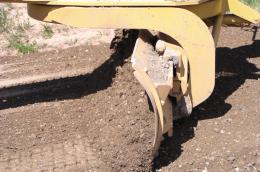
Maintaining a safe and reliable road network for the 200+ miles of non-paved roads in Western Larimer County requires a continuous and dependable aggregate supply.
To meet this long-term need, Larimer County has selected a proactive, localized approach: establishing several small, geographically dispersed quarries close to the roads that need maintenance. This dispersed quarry model provides several benefits:
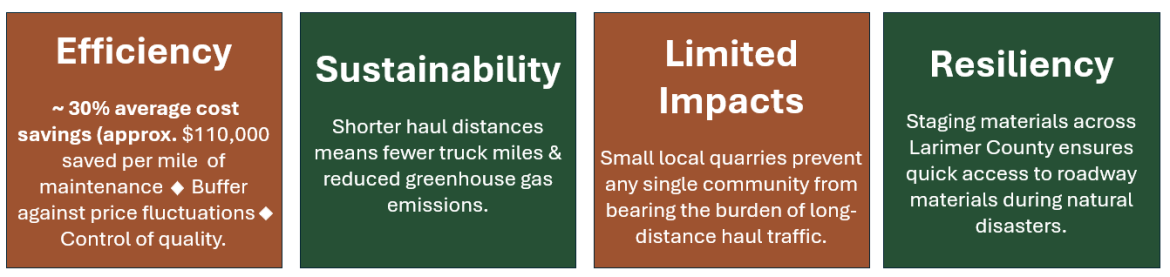
Efficiency & Cost Control: County-owned aggregate allows for control of cost, quality, and material supply chain. Locally sourced aggregate saves over 30% ($110,000) per mile of roadway maintenance when compared to hauling aggregate from the Front Range. Managing County-owned aggregate sources also insulates taxpayers against commercial price spikes.
Sustainability & Lower Emissions: Shorter haul distances means fewer haul truck miles, reduced fuel consumption, and lower greenhouse gas emissions. It also extends the operational life of the County's Front Range Strang Pit.
To support this long-term strategy, Larimer County and the US Forest Service have executed a Memorandum of Understanding (MOU). The agreement establishes a shared commitment over the next 50 years to jointly work toward identifying suitable aggregate resources, advance required permitting, and authorize quarrying activities for aggregate resources projects.
Limited Community Impacts: Establishing small, local aggregate sources prevents any single neighborhood or corridor from bearing the heavy traffic burden of long-distance gravel hauling. The decentralized approach eliminates the need for large, high-impact quarries in favor of smaller, lower profile sites that meet the localized demand.
Disaster Resiliency: Staging materials across the County improves road crews’ access to gravel to rebuild damaged roads after natural disasters, bypassing potential bridge weight limits and reducing response time to rebuild damaged infrastructure.
Other Alternatives Considered
Several alternatives were considered to ensure Larimer County has a long-term, sustainable supply of aggregate for non-paved roads. Before selecting the geographically dispersed quarry strategy, Larimer County also evaluated these options:
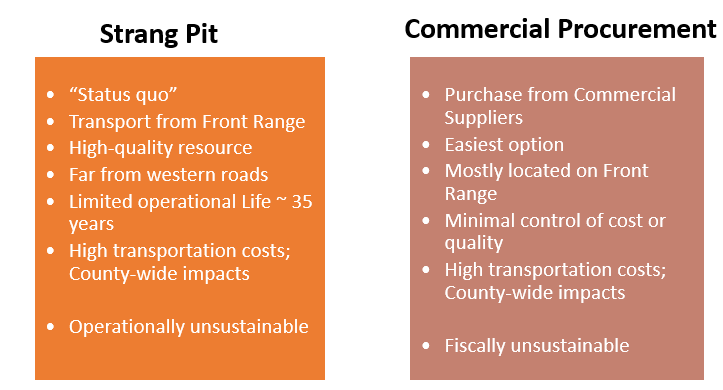
- Relying on the Strang Pit
Larimer County could continue to source all gravel from the County-owned Strang Pit located at Strauss Cabin Rd. and Horsetooth Rd. in Fort Collins.
The Issue: Hauling gravel over 50 miles into Western Larimer County causes wear and tear on County roads and generates high transportation and maintenance costs. Relying only on the Strang Pit puts unsustainable pressure on this limited resource and eventually the aggregate at this site will run out.
Outcome: This alternative is operationally unsustainable.
- Purchasing Gravel from Commercial Suppliers
Larimer County could buy gravel from commercial sources along the Front Range.
The Issue: Relying on commercial gravel from the open market limits the County’s ability to control the cost and quality of the materials needed for non-paved roads for future decades. Like option 1, sourcing gravel from the Front Range requires aggregate to be hauled long distances to Western Larimer County, increasing wear and tear on County roads, impacting traffic across the County, and resulting in overall higher road maintenance costs.
Outcome: This alternative is financially unsustainable for long-term County budget planning.
Learn more about current gravel sources.
Learn more about current activities to find new gravel sources.
